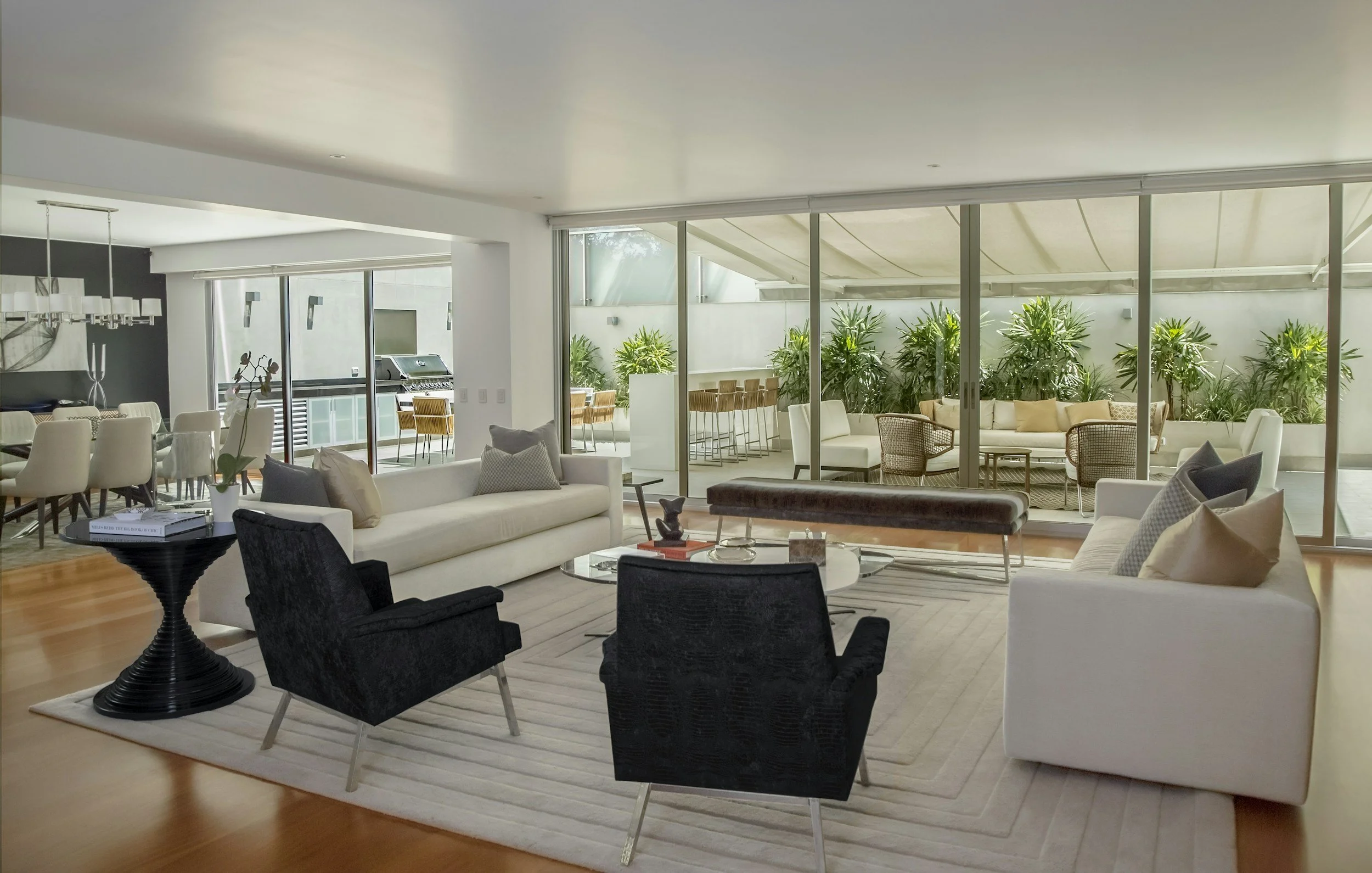
The Invisible Preservationist: How ProLayers Window Film Protects the Interiors Designers Create
There is a particular frustration that interior designers know well: a project completed to a high standard, photographed beautifully, handed over to a delighted client — and then, a few years later, visibly diminished. Upholstery faded along the sun-facing side of a sofa. A hardwood floor with a bleached stripe where afternoon light falls every day. Artwork that has shifted from vivid to muted without anyone quite noticing when it happened.
These are not failures of taste or specification. They are the predictable result of ultraviolet radiation doing what it always does to organic materials: breaking down the chemical bonds that give color and structure to fabrics, wood, finishes, and artwork. UV radiation is responsible for the majority of interior fading, and it comes in through glass every day, silently and invisibly, regardless of how carefully everything else has been considered.
ProLayers window film stops it. That's the core of what ProLayers offers designers: the ability to protect what they specify, extend the life of the interiors they create, and deliver projects that hold up over time the way they looked when the photographs were taken.
UV Is the Primary Cause of Fading — and It's Preventable
Interior fading is often attributed to 'sunlight,' which is technically accurate but imprecise in a way that matters for designers. Visible light contributes modestly to fading. Infrared heat contributes to some material degradation over time. But ultraviolet radiation — the portion of the solar spectrum below visible light, entirely invisible to the human eye — is the dominant driver of fading in virtually all interior materials. It accounts for roughly half of all fading in most interior environments, with heat and visible light accounting for the remainder.
ProLayers window film blocks up to 99% of UV radiation, addressing the single largest cause of interior fading with a product that applies directly to existing glass and requires no alteration to window treatments, lighting design, or any other design element. For designers whose specifications include natural light as an aesthetic consideration — and that is most of them — ProLayers offers UV protection without sacrificing the light quality that makes naturally lit spaces beautiful.
Clarity IR Max 75: Designed for Design-Sensitive Environments
ProLayers' Clarity IR Max 75 is the product that most directly addresses the designer's concern about visual impact. With a visible light transmission of 75%, it is the most optically transparent film in the ProLayers portfolio — applied to glass, it is essentially undetectable. There is no tint, no color cast, no visible film surface. The window looks like a window.
What Clarity IR Max 75 adds, invisibly, is targeted protection against the two most damaging elements of solar radiation for interior finishes: UV and infrared heat. The UV protection preserves color and material integrity in everything from custom upholstery to fine art to engineered wood flooring. The IR rejection reduces the heat that builds up near glass on sunny days — the uncomfortable warmth that makes occupants pull shades or relocate furniture away from windows, both of which compromise the spatial intent of a well-designed interior.
For designers working on residential projects, hospitality environments, galleries, or any space where material quality and light quality are both central to the design, Clarity IR Max 75 is a specification that protects one without compromising the other.
Protecting the Full Material Palette
Interior designers specify across a wide range of materials, and UV degradation affects them differently but consistently. Natural fiber textiles — wool, silk, linen, cotton — are among the most UV-sensitive materials in any interior and will show fading relatively quickly in unprotected sun exposure. Synthetic fabrics are more resistant but not immune. Hardwood floors, whether solid or engineered, will lighten and lose warmth over time in sun-exposed areas, creating visible variation that conflicts with the uniformity of the original specification.
Artwork is perhaps the most costly casualty of unprotected UV exposure. Original work, limited editions, and quality reproductions all contain pigments that UV radiation degrades over time — a process that is irreversible once it has occurred. For clients who have invested significantly in art as part of their interior, UV protection through window film is not a luxury; it is basic preservation practice.
ProLayers window film addresses all of these material categories simultaneously, from a single application to the glass. It is one of the most efficient protective measures available in terms of coverage relative to installation effort — treating the glass treats everything behind it.
The Recommendation Clients Remember
Designers build reputations through the quality and longevity of their work. Clients who return, who refer others, who credit their designer with creating spaces that still feel considered years later — those relationships are built on projects that perform over time, not just projects that photograph well at handover.
ProLayers window film is the kind of specification recommendation that clients remember favorably, because they see its effect every day in the way their interiors continue to look the way they were designed to look. It is a practical, thoughtful recommendation that reflects a designer's understanding of how materials behave over time — and a genuine commitment to protecting the investment clients have made in their spaces.
ProLayers protects what designers recommend. That's the commitment behind every film product in our portfolio.